Interview with Dimitris Mavrozoumis

Who?

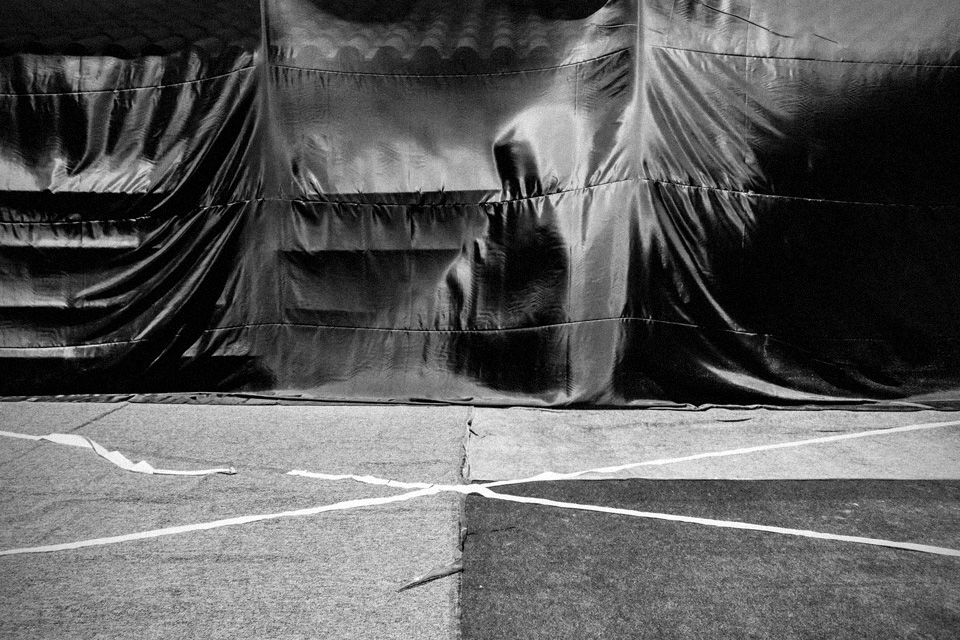
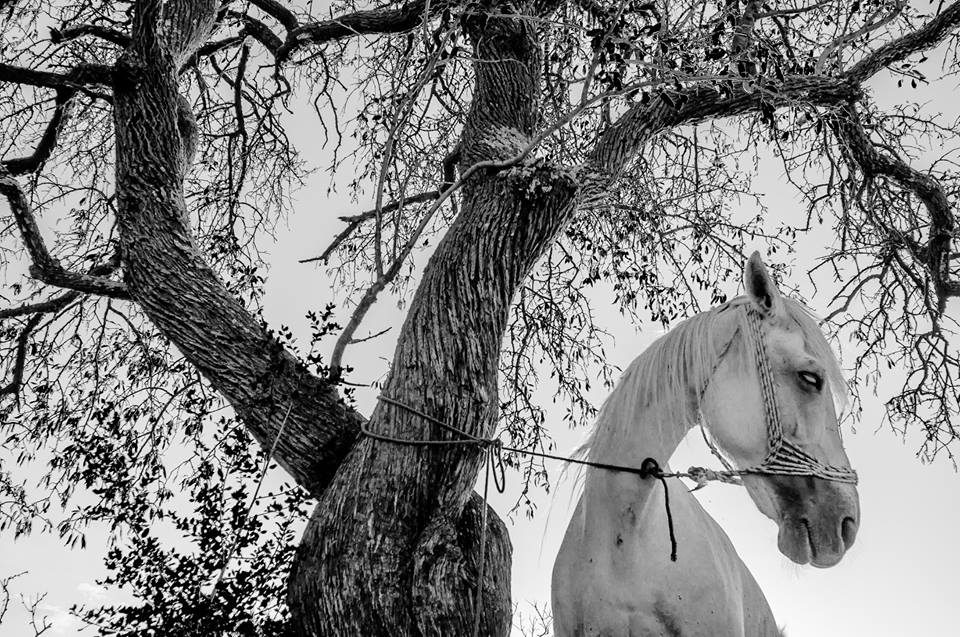
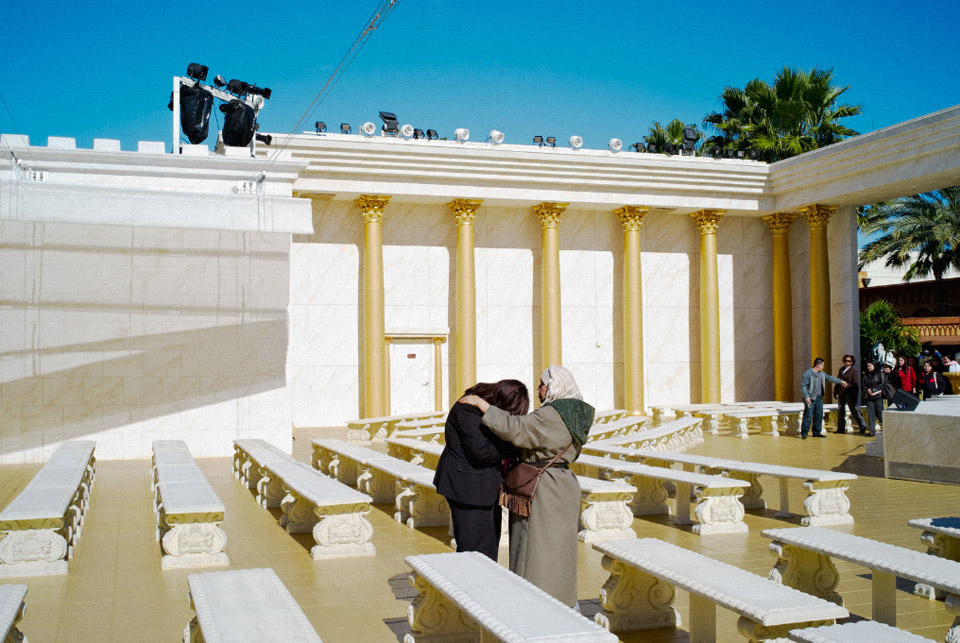
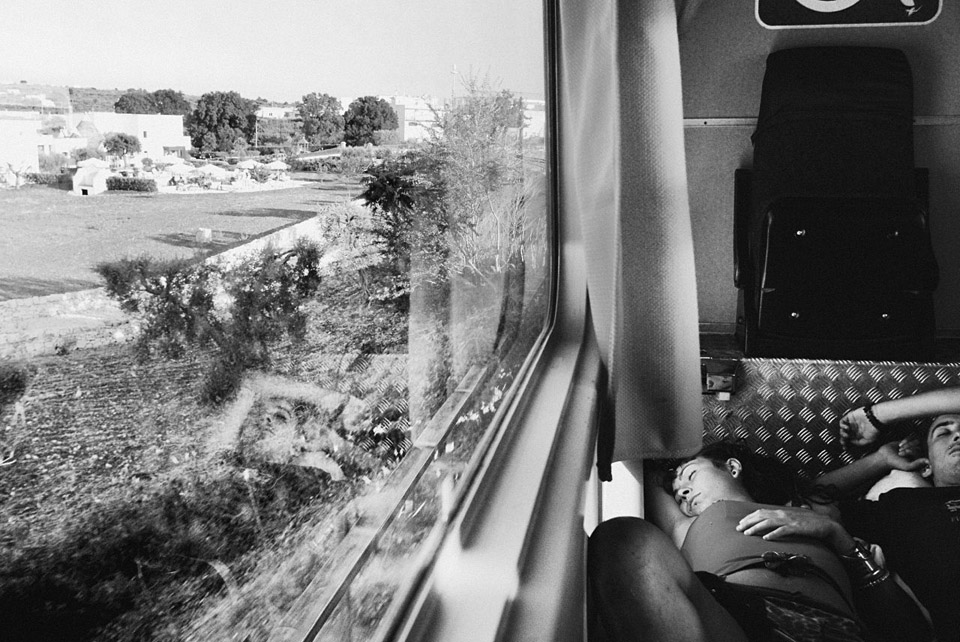
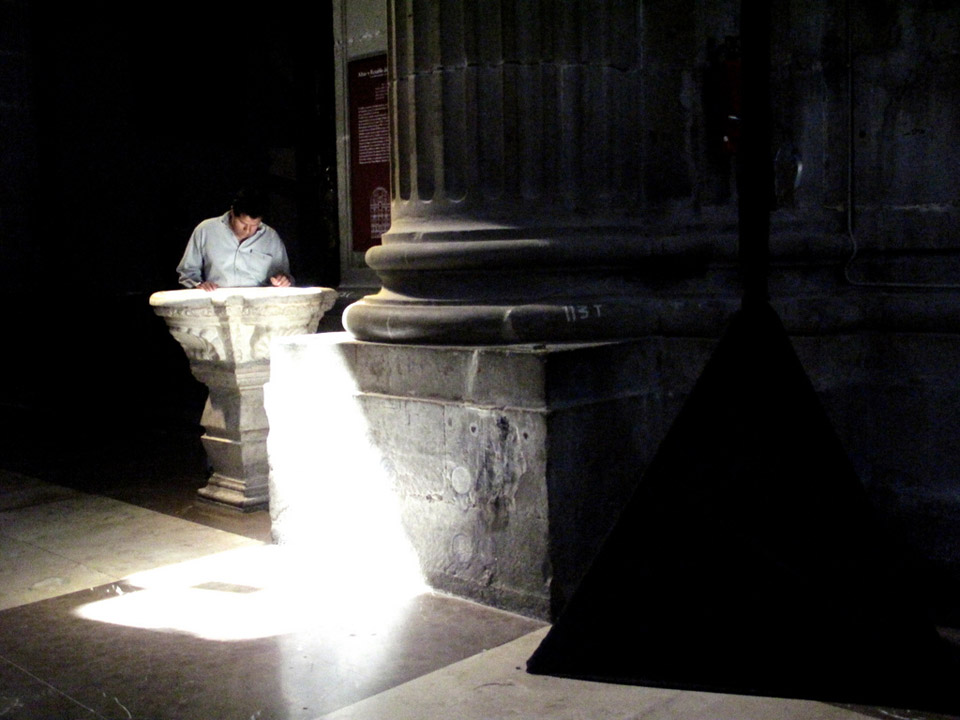
I ‘m Dimitris Mavrozoumis from Greece, i started to shoot photos in 1997. I’m self taught, my photos reflect my life’s memories. My deepest respect goes to Eugene Adget, Walker Evans & Garry Winogrand.

Interview with Dimitris Mavrozoumis

Where?

I was born and live in Loutra Aidipsou of Euvoia island. I ‘ve attended classes in the National Auditorium of M.Kalomoiris, i can’t imagine myself living without music. I feel like i ‘m driven by this when i ‘m shooting photos, things before my eyes seem like scattered notes that i have to put together and unite in a melody.

Interview with Dimitris Mavrozoumis

When?

The first picture i took was a tourist girl sitting on a bench; i shot with a 200mm lens and my heart started beating fast, scared that i might wake her up. After watching how G.Winogrand was shooting from close distance, i practiced myself to shoot invisibly; i started shooting without film and i was showing the empty camera when people reacted aggressively. Gradually i realized i had to shoot with manual pre-focus, with my hands tied up on my body and hold the camera down immediately when there’s no other image to be shot.

Interview with Dimitris Mavrozoumis

What?

When i see something that attracts my attention i might take a good picture only if i somehow can coordinate with it; then it shows me the way how to take the picture. The background is always decisive regarding the point of view and the moment that a photo will be taken. A man near a window is different than the same man in front of a door, different than him next to a lady’s backside.

Interview with Dimitris Mavrozoumis

Why?

I take pictures to see how the things that touched me seem photographed. I shoot for myself, i don’t care if my photos will be liked or not, there are many ways to make images seem more impressive, even with post-procession. Everyone can see what i shoot, at the end the thing that stays and belongs only to me is the moment of the click, which was spread like a flash in me back then.

Interview with Dimitris Mavrozoumis

© Dimitris Mavrozoumis

Interview with Cheryl Dunn

Who?

Documentary photographer/filmmaker. Director of Everybody Street. Born and raised in NJ; moved to Milan after college; NYC for the past 30 years. I was originally a dancer/gymnast in high school, but I fell in love with photography in college.

1

Where?

The streets, and especially my home of NYC. I’m working on a book of photos from the Financial District, where I’ve had my studio in an old loft for the past 25 years. This was the original neighborhood of Manhattan back when it was colonized by the Dutch: these streets are the oldest and most contentious part of the island. The mix of wall street executives, homeless, tourists and just regular commuter is endlessly fascinating. Mirror sharp light cutting through the crosswalks as it bounces off of enormous skyscrapers, a sea of people on foot, light shafts and shadows from scaffolding tunnels, it really is the perfect place to shoot.

2

What?

People expressing their individuality on the street, and the many ways that is manifested. Hand-written signage has always been particularly important to me, whether it’s protesters, sidewalk vendors, or some cryptic phrase scrawled in sharpie on a t-shirt. I also love shooting at music festivals. It’s a great gauge of people’s relationship to the camera – in front of the lens and behind it. This changes constantly as technology evolves. Being able to shoot five days in a row in a sea of 100,000 happy people really energizes me and keeps my photographic muscles in shape.

3

When?

Whenever I can, but my favorite times are the busiest times, rush hour and lunch hour. Light is fleeting and you have to be flexible enough to run outside when it’s getting good. You have to be willing to turn around on your bike and go back and GET the picture.

5

Why?

I studied art history and I’ve always been interested in documenting the artistic process, as a reference for future generations to be inspired by. Life on the street is continually unfolding, and if you’re willing to look for it, magical things are happening every single minute. Even more so, photography is a personal way of chronicling ones life, and most of all, I love that it leads you into worlds of new discovery.

6

All images © Cheryl Dunn

Interview with Noel Camardo

Who?
I grew up in downtown NYC in the 1980’s. I spent a lot of time sitting on the stoop outside of my parent’s shop, watching the downtown cast of characters go by. This stuck with me, and by 17 I figured out I could indulge this with a camera. Close to 20 years later I’m still at it, making photographs of strangers. Currently I live in Brooklyn NY with my wife, painter Caris Reid.

Interview with Noel Camardo

Where?

I don’t value one lighting condition over another, I like all times of the day equally, I treat noon, the same as morning or evening light.

Interview with Noel Camardo

When?

Currently I have two projects that I’m working on. The first project is focused on income inequality, race relations and the displacement of main streets across America.
The second is an ongoing series of Manhattan street scenes.

Interview with Noel Camardo

What?

When I take a picture I give equal weight to everything in the frame, a puddle has as much visual importance as a figure. There’s no hierarchy in my photos. Usually my photographs are the result of a long walk, that could be in the woods, a strip mall parking lot or fifth avenue. It’s that feeling of not knowing what you’ll encounter next that keeps me going.

Interview with Noel Camardo

Why?

I want to capture the essence of our time.

Interview with Noel Camardo

© noelcamardo.com / tumblr

Interview with Diadà

Who?

I’m very shy, even if I don’t look it, and vice versa. I really love vegetables, apart from cucumbers. If I’m in the tropics, I like fresh fruit even better, especially passion fruit. I’m afraid of monotony and monogamy, and have been ever since I can remember. My parents baptized me Francesca Nicolosi (just like that professional photographer – but I’m not her), although my dad calls me Giorgio or Michele all the time. When I’m shooting I’m Diadà. Anyway, considering I got un-baptized a few years ago, you can call me whatever you like. I was born on October 13th, 1975, in Northern Italy, and since I was 18 I have lived a nomadic existence.

Interview with Diada

Where?

I shoot anywhere I happen to be. I go from mundane situations in the dullest places, to situationist events in squats, from the reality I perceive in that particular moment, to concrete or natural landscapes. This is why I need to live with my friends, from one house to another, or travelling in a van, often changing towns and cities, and when I can afford it, even countries or continents.

Interview with Diada

When?

I think I took my first picture in the summer of ’07, perhaps. That was when the urgency of living together with my cameras was born (if we’re sleeping outside we regularly sleep together), even if I’m not shooting all the time. However, the real obsession started when I’ve met that bunch of photography junkies at FotografiDiStrada : discovering that you’re not alone in this nice, sweet addiction helps a lot.

Interview with Diada

What?

It depends on which one of my various personalities prevails at that specific moment , and of course I get influenced by what surrounds me. I shoot anything I see and/or anything that sees me. I like to seek out those compulsive gestures, the emptiness outside and inside us, the animal, human and not-so-human kingdom.

Interview with Diada

Why?

I don’t sleep much. I’m carried away by emotions, and I love it.

Interview with Diada

© Diadà

Interview with Nayeli Cruz

Who?

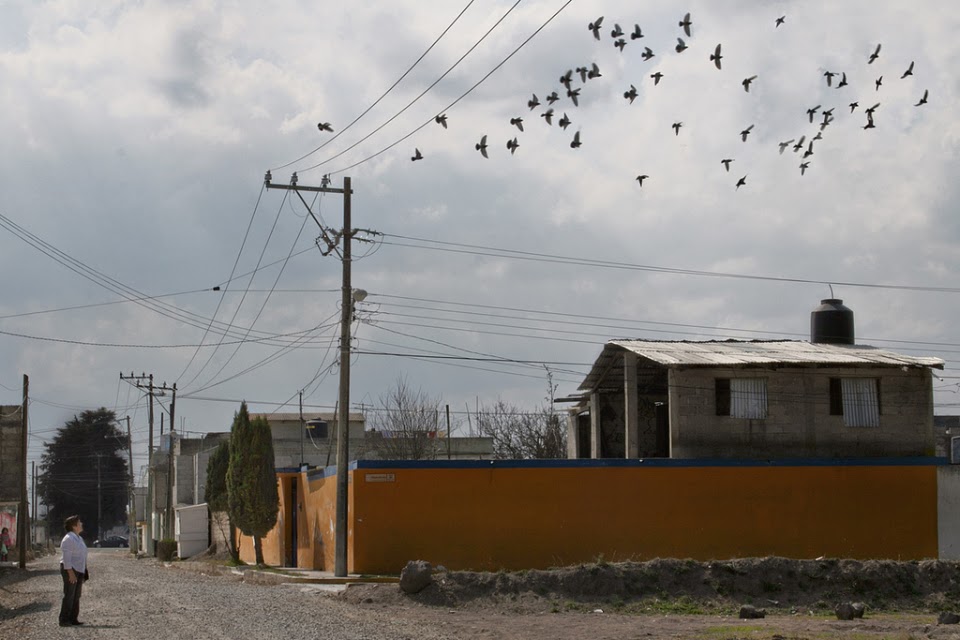
I am from Mexico City, 29 years old and studied psychology in university because of my great interest for the human mind. 7 years ago I took my first photography course and I think it changed my life completely; I was interested in painting and didn’t see myself as a photographer. I never thought I would be so connected with people through a camera and that I could interpret this from my own point of view. This generated an addictive feeling in me, and I haven’t stopped photographing since then.

Interview with Nayeli Cruz

Where?

Mexico is a surreal country, expressed in every street, in each house, in its music, religion and history; I enjoy travelling in this country and discovering it through my camera. Any place could be a possible stage; the intimacy of a private home, the street, a market, a feast, my roof. I try to pay attention and let myself being surprised. There is poetry in each place, and when I feel it, I take a photo.

Interview with Nayeli Cruz

When?

I get instinctive and visceral whenever I have the impulse to make a photo. I think this is reflected in my work. Occasionally I need to get away from the world but I’ve never left aside my camera. It has accompanied me every moment. I go out to walk, to observe, and always find a pretext to make a photo: I do it when I want to hold on to a moment, when I meet a fascinating person, or when I´m with a beloved person, in every trip I make, and whenever I feel there is an interesting story.

Interview with Nayeli Cruz

What?

Although the outside world is portrayed, photography is always about oneself, about desires, fears, passions, lifestyle… I find myself in the chaos of the street, in music, in Mexican celebrations, in mechanical workshops like my father’s one. There are religious images everywhere. It is what I see. It’s what I live. I like street photography and documentary, but sometimes I create a little fiction in my shots. I’m looking to transmit emotions and feel identified with the portrayed persons.

Interview with Nayeli Cruz

Why?

I can’t stop photographing. It is my therapy. I’ve never been very good at expressing myself with words, but through my pictures I speak without difficulty. With my camera I came across many places and people who are now very important in my life. It has opened doors I didn’t know I had. It has confronted me with myself again and again and made me see the world differently. As I said before, it has changed my life completely.

Interview with Nayeli Cruz

© Nayeli Cruz

Interview with Chema Hernández

Who?

I was born in Salamanca, Spain in the early 60s. I studied Fine Arts at the university. Now I live in Oviedo with my wife and my two daughters, and work as a teacher in a high school teaching subjects related to art. My first moderately serious contact with photography was at the university in the 80s. At that time I was taking pictures in black and white and processing them in my own darkroom. I was particularly interested in documentary photography. I never stopped taking pictures, mainly on travel, although my main artistic activity was always painting. In 2008 I discovered contemporary street photography and since then it has become a very important creative resource for me.

Interview with Chema Hernández

Where?

Almost anywhere. At home, from the kitchen window, from my car, at work … and of course on the street. Any place is potentially suitable to extract an interesting image from it. I live in a small town where practicing street photography is a real challenge. I remember at first I was surprised when I saw again on the street someone who appeared in one of my photos. It no longer surprises me because it has become something usual. Extraordinary situations are rare and it seems that it is always just more of the same. I attempt to overcome these difficulties with imagination and expanding horizons, carrying often my camera with me and taking advantage of any opportunity that may arise. I try not to get stuck and explore different city areas, subjects or ways to compose the image. Experimenting is important to me.

Interview with Chema Hernández

When?

I try to go out to shoot whenever I can, but I do not do it as often as I would like. I take advantage of the opportunities I have in my daily activities, both at home and elsewhere. For maximum concentration, to me it is important to photograph alone, although I also do it when I am with someone, mainly with my family. It is during these sessions alone when I enjoy it most and I can spend hours taking pictures. I’m much more active in spring and summer and when I travel. Anyway, even if I am not taking pictures, I’m thinking or reading about photography or following the work of others.

Interview with Chema Hernández

What?

I prefer subjects related more to emotion and less to description. To do this I try to find poetic elements that suggest open interpretations to the viewer. I am also interested in images with high narrative content and where mystery is an important ingredient. The formal aspects of the image are very important to me. I look for clear compositions, sometimes minimalist, other times more baroque. I am also interested in decentered compositions where the negative space plays an important role and the main elements are distributed along the edges of the image. I use both color and black and white, depending on whether the color is an important element of the image or not. Eventually, my images are grouped in themes which have become long-term projects such as “Ciencias Naturales”, which has to do with the natural world around us, or “Crónicas del Micromundo”, a kind of family album. I am also working on others such as “Anomalía”, in which I include elements that break with the urban order, or a project about atypical postcards from where I live. I also work on joint projects with my colleagues at Vivo Collective.

Interview with Chema Hernández

Why?

I have always been interested in the world of image and creativity. I guess I feel the need to trigger my imagination. Photography is for me a medium to achieve this, as well as painting, drawing, or sculpture. Although each medium has its own language, all of them have in common the creative component, which is essential to me.

Interview with Chema Hernández

© Chema Hernández

Interview with Pierre Wayser

Who?

I was born in Paris in the mid ’50s. My family came from Poland in the early ’20s. My parents were communists and small art dealers. I discovered Jimi Hendrix, LSD and the underground culture in my early teens. Aged almost 17, I gained entrance to the prestigious Ecole Nationale Supérieure des Beaux-Arts in Paris, in the early 70s. I quickly plunged into the turmoil of the artistic underground of the time. After studying painting and art history, and not wishing to do my military service in France, I found myself on a cargo ship among «boat people» in the China Sea and bound for Borneo in the mid ‘70s. I spent some time in different tribes in the Philippines. A few months after the death of Mao, I traveled in China. A few years later, back in Paris I began to paint more regularly, and also working on designs for opera and theater. During all these years, the practice of photography was constant but secondary. Then in the late ’80s, after living a year in Australia, I stopped photography altogether to devote myself primarily in the production of videos and animated films. After a hiatus of fifteen years, in 2006 I started again to practice photography with a digital camera. But my main occupation, for the last eighteen years, is the making of a garden in Paris.

Interview with Pierre Wayser

Where?

Anywhere ! Since my childhood, I was fascinated by the Far East. The only news reaching us, in those years, were the Vietnam war, The Yellow Peril, Maoists dancing soldiers in strange operas with a red flag and Soviet leaders saluting with one hand, half hidden behind a wall during the parade on the first of May. But everything started when I left at the age of 17, hitchhiking to Morocco (with a camera Retina IIa Kodak) to improve my relationship relative to hashish. Then shortly thereafter, I traveled mostly Asia for years from Mongolia to New Caledonia, with a few rambles in Africa… I did not take always photographs… I have been twice in Japan and never made an image ! I still have to discover America…

Interview with Pierre Wayser

When?

I’m always carrying a camera, which most of the time is gathering more lint from the bag than light. I shoot sparsely… A long habit when I was younger and poor (I am no longer young). Photography has always been an expensive hobby. In those analog times, I shot less than fifty rolls in my whole life. But today, with digital, I become lazy and less careful which leads me to take some crappy images just to see how it looks !

Interview with Pierre Wayser

What?

Well, it is difficult to speak about the kind of image I want to get. I do not know exactly what kind of pictures I take. I have no clue what is a good photograph. Most of the time, it’s a matter of tension and release. It is deeply rooted in sexuality. It is a kind of frenzy. For perhaps thirty minutes I can be in the flow, then it’s gone. I have a good knowledge of the paintings from the seventeenth century, and I know it affects my own vision. Snapshots which looks like staged have my preference. Sometimes, I organize cultural events in a garden and I shoot snapshots which are widely «prepared». I’m not a street photographer or whatever name you give it. The only thing I know is that I like climbing a ladder and sing about myself. In my view, photography can not be a project or job. Photography is a state of being! Of course, in public, I can speak with great intellectual references, and show how smart I am, but the truth is I do not know what happens when I pull the trigger. At best, I see myself as a diarist.

Interview with Pierre Wayser

Why?

Photography is less a way to remember the past than to reorganize the memory. After the murder of my younger brother, I felt the need to look after what was left of my archives. It was not anymore possible to look after some family stuff, and I bought a digital compact to recreate what was missing in my life. I mean, I had to re-write my past as a lone born individual. And to fill up the missing images with a fake silly happiness. Fifteen years whitout almost touching a camera, and I started again to take photographs. That was my therapy ( I’m not very fond of “shrinks”)! I can say that my work is mostly a “life-time project” (although I hate this word) based on truncated archives.

Interview with Pierre Wayser

© Pierre Wayser

flickr / tumblr

Interview with David Wilson

Who?

I was born in Italy in the late seventies, to an English father and an Italian mother. I got my first camera when I was twenty years old: I was into the hardcore punk Italian scene back then, playing guitar with a band and that kind of stuff. My interest in photography grew stronger and stronger, as soon as I realized the immediacy of the medium. I know music and photography are completely different beasts, can’t find a way to compare them without sounding like a complete idiot, but I felt like photography was the natural evolution of that urgency of expressing myself and, you know, with a camera it was just a matter of pressing a button. Well, I might be making it sound a bit too easy, it wasn’t. Anyway, after just a few years I found myself without a band anymore, but with a huge amount of film in the fridge.
Interview with David Wilson

Where?

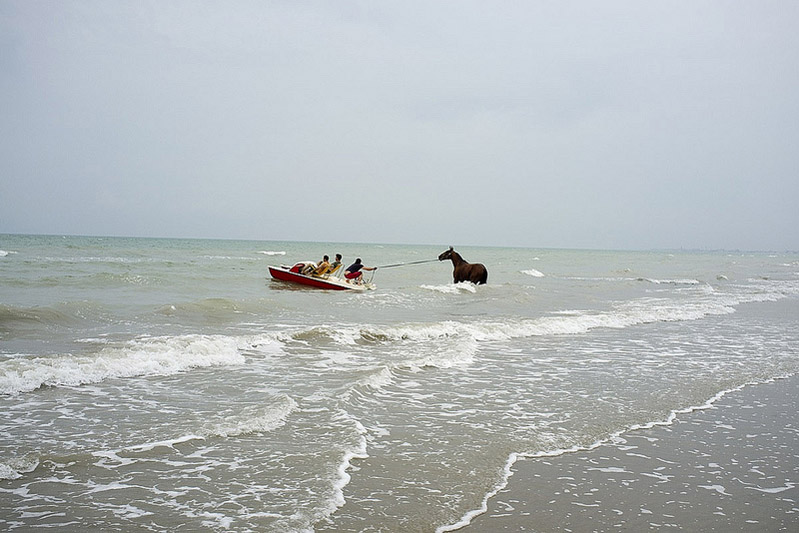
My hometown is in an obscure part of north-eastern Italy, roughly at the same distance from Venice and Trieste. I lived in both for a few years, and I actually moved there because I thought they were more interesting places to shoot in the street. At the same time I’ve developed a strong interest in landscape photography, both in urban areas and the countryside. Later on I moved to London for a while, as I definitely needed to work in a somewhat more chaotic place. I needed more people, more weirdness, and most of all I wanted to mix the landscape and the street work, I wanted to find a stronger connection between those two elements which until then I had kept somewhat separated.
Interview with David Wilson

When?

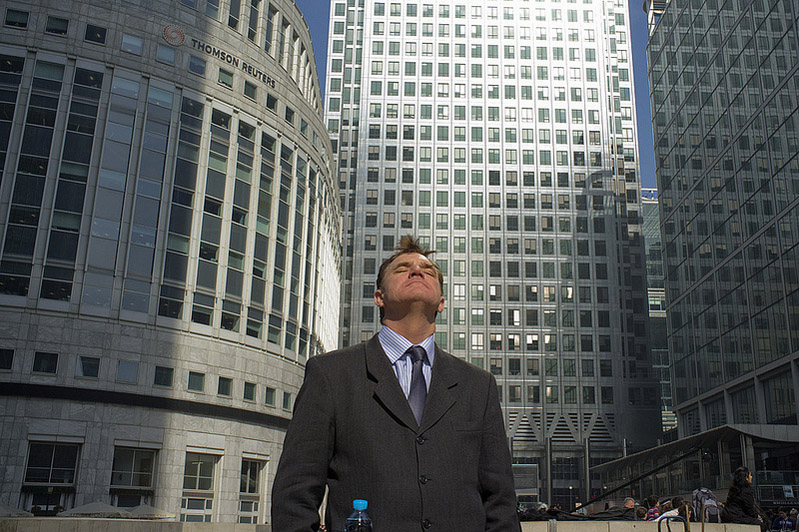
Anytime, I would say. I try to always have a camera with me, even if I don’t actually use it so often. Unfortunately I’m not that kind of photographer who can switch to shooting mode immediately: especially when I’m shooting in the street, I need more time to adapt to the flow of people and things, to get along with it. Sure, I’ve managed to take the random photograph plenty of times, but I have to admit I’ve missed many too, because of this. At the same time, when I finally find myself in shooting mode, I can go on for a long, long while. Same goes even when I’m doing some more contemplative work, I find myself thinking about it all the time, for weeks or months. It’s exhausting and I definitely need some break once in a while, but I love it nevertheless.
Interview with David Wilson

What?

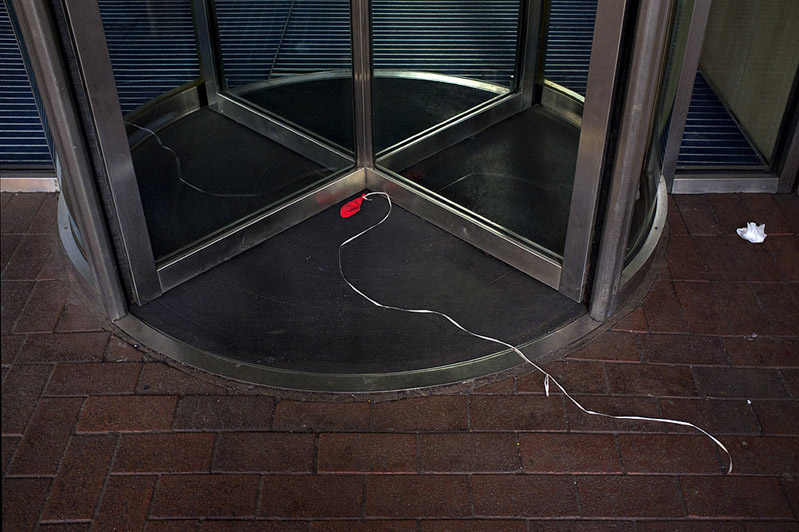
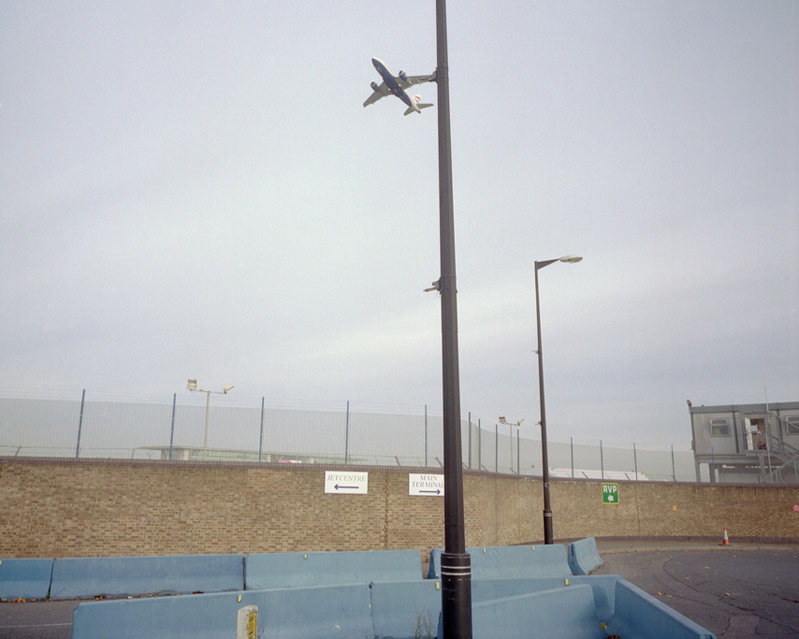
Shapes, gestures, colours, the connection between these elements and many others. Anything which somehow looks out of place captures my attention, so I often try to sneak as much context as possible into the frame: I carefully choose the location where to shoot, and most times I wait there until anything interesting happens. Often I’ll come across something where I’d least expect it, though. I think this particular way of working is influenced by my background in landscape photography, but I’d also say that my later documentary work has become influenced by my street stuff. I realized that when I was working in London a few years ago, and I was surprised to see how these approaches merged together and turned into one very naturally. When I returned to Italy I was able to look at that work from a distance both geographically and from a time perspective. The two years I spent shooting in London eventually got published as Minor Collisions, my first monograph, published by L’Artiere and part of the Urbanautica Collections. Although part of my family comes from Ealing, London was a place I barely knew even though I’d been there many times. Because London is huge, I quickly gave up on the idea of explaining it even before moving there. I thought it would be much better to limit myself to aimlessly walking with a camera, and allowing the place to eventually unveil itself. I wanted the place to lead the work. Since then I’ve concentrated on some local long term projects. The one I’m working on right now couldn’t be any different, and is based in a small harbour on the Adriatic coast, where there’s a tiny spot by the sea, which is kinda unspoilt, but it’s surrounded by this very grim industrial area. The whole thing is probably less than one square kilometer in size, and I’ve gotten to know every stone of that place. So, I’m basically going out knowing with a certain level of accuracy what I will shoot, whereas in London I had no idea.
Interview with David Wilson

Why?

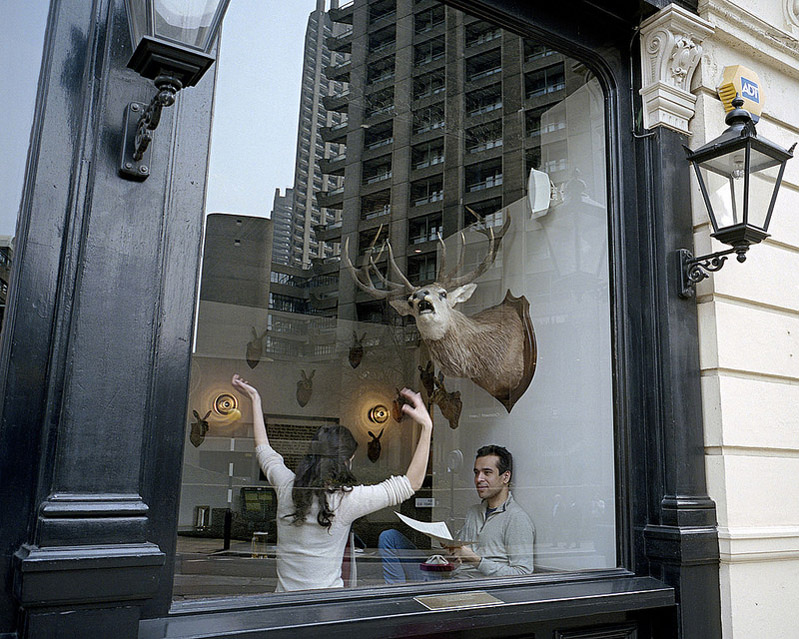
I guess I’m curious, first. Then, I need time to understand things. Better to take a picture of them, so I can take a look again when I’m at home. To be honest, I’m even happier when I can’t understand why I took a picture even at a second glance, but it still keeps resonating. I think this is what excites me about photography the most, the idea that by just pressing a button, I can print onto paper something I’d never been able to put into words. I like doing more contemplative documentary work too, a lot, but the possibility of grasping something which is going to disappear within a split second is just as compelling. These very different approaches to photography somehow balance each other, as I feel like I’m providing as many questions as answers, in a way. So yeah, I love to shoot life in the broader sense, and the idea of collecting both my observations on the world and those weird moments I might stumble upon from time to time, is what drives my interest in photography.
Interview with David Wilson

© David Wilson

website / instagram