Interview with Fermín Guzmán

Who?

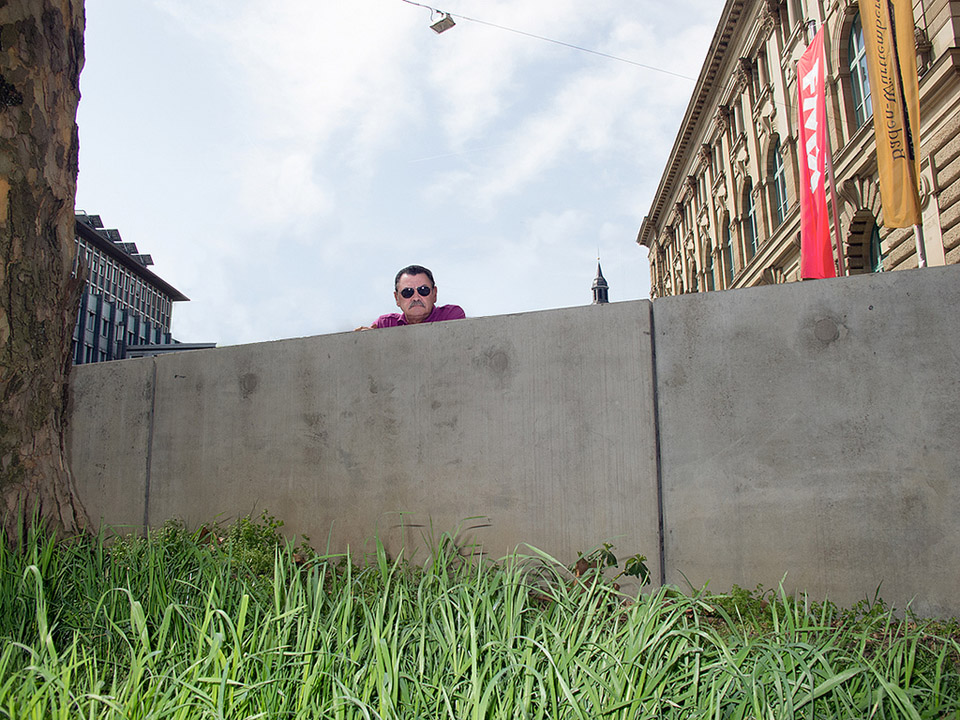
My name is Fermín Guzmán. I was born in Mexico City although I live in the municipality of Chimalhuacán. I started my photography studies in 2008 and since then I have felt a huge passion for street photography because it allows me to show my reality.

Interview with Fermín Guzmán

Where?

Mexico is a country of social contrasts, colors, stories and incredible sites, from the neighborhoods of the cities to the indigenous peoples. Everything I look at with an anthropological look. I think my country is my biggest inspiration because I’m too excited to show my surroundings and my reality from my point of view with my own eyes and now with my camera. On the other hand I am very grateful to my photography professors Mark Powell, a great street photographer, and Jesús Villaseca, an incredible photojournalist. They inspired me to continue with this profession and above all to give it a sense and value.
Interview with Fermín Guzmán

When?

For me, photography is an emotional therapy, since I forget all my problems when I take my camera and start walking and observe everything that surrounds me. I also observe everything anthropologically. I am surprised by the city and rural customs, social relations that occur in these places, architecture, religious and commercial symbols and I get lost in the vastedad of Mexico City or a city far from the capital of the country. In that sense my walks are constant, two or three times a week, although all the time I charge my camera in case something catches my attention.
Interview with Fermín Guzmán

What?

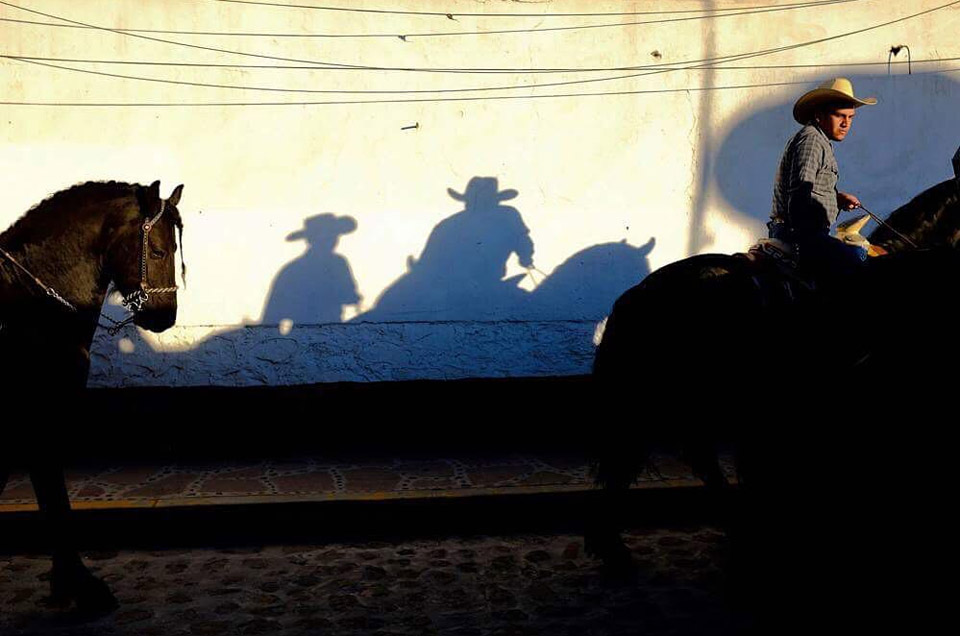
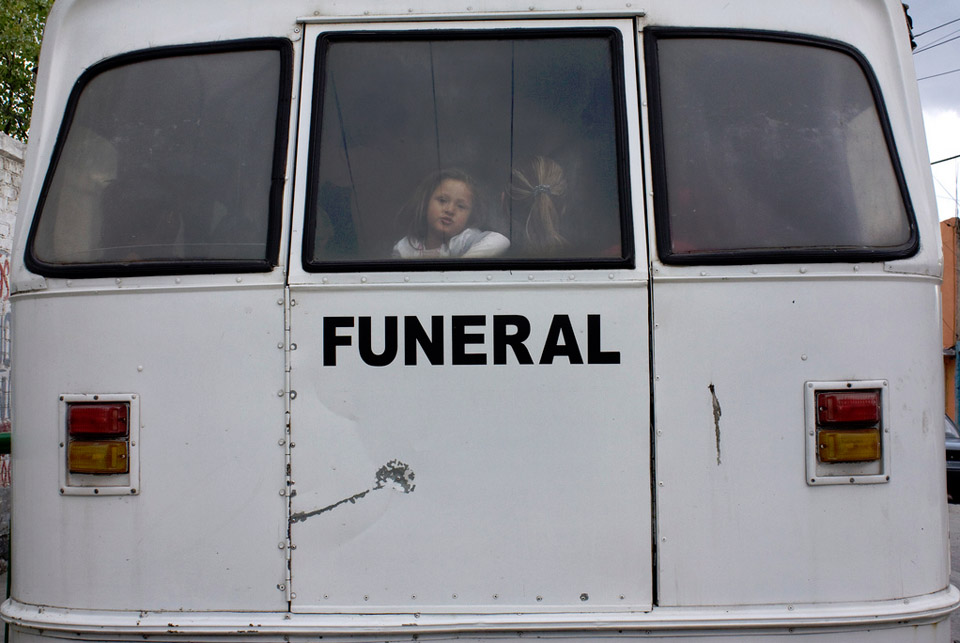
Street photography is composed of several elements that combine with each other in an equal time and space, such as light, shadows, colors, shapes, architecture, people, symbolism and even the behavior of the crowd. Knowing how to find and unite these elements can create unique and extraordinary moments. The way to find these elements is observing, and necessarily the street photographer must be an expert observer and sensitive to their surroundings. One of the many definitions of the term “magical realism” says that it is an attitude to reality that does not lead the author to the creation of imaginary worlds, but induces him to penetrate reality in depth, to discover the mysteries that are hidden in her. Knowing and walking the streets of the city, the neighborhood or the village can give us much material to exemplify the “magical realism” we can find in these places moments and wonderful characters that did not seem real but are.

Interview with Fermín Guzmán

Why?

I document the streets for two reasons, firstly because I am passionate about walking the streets and feel like a tourist in my city or a visual anthropologist. Secondly because I believe that street photography is a document of historical awareness that will serve to make the children of our children realize the way of life of generations past and glimpse the why of their current reality.
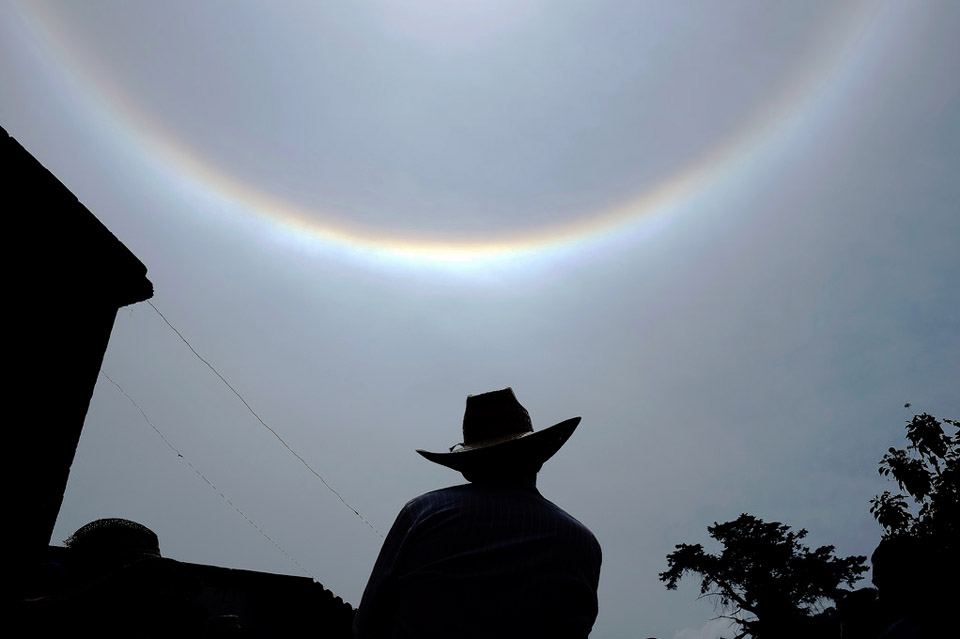
Interview with Fermín Guzmán

© Fermín Guzmán

flickr / instagram

Interview with Dennis McGuire

Who?

I once saw a man shot dead in the street. The flash of the gun was like the flash
of a camera, freezing a shocking image on the sensor of my eye.
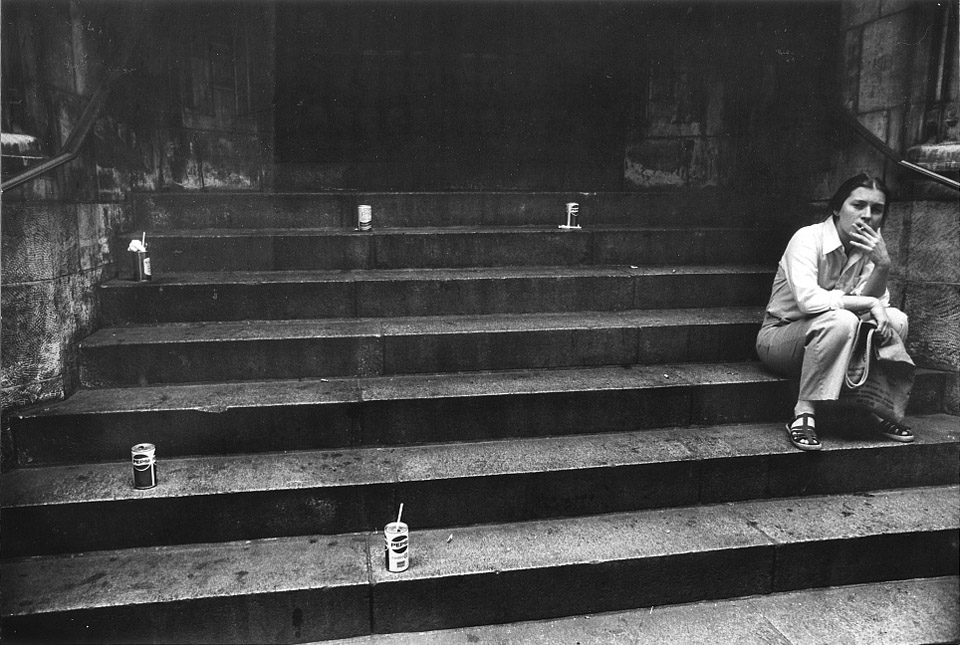
I studied with Garry Winogrand at the School of Visual Arts in NYC.
Back then, my camera was a passport, allowing me liberties I otherwise wouldn’t have taken.

Interview with Dennis McGuire

Where?

For a while, I worked in New York, as a freelancer but The Coast was calling.
In San Francisco, I found steady work as a technical photographer.
It’s nice to get paid for playing with cameras.

Interview with Dennis McGuire

When?

Bear in mind I don’t have a current project.
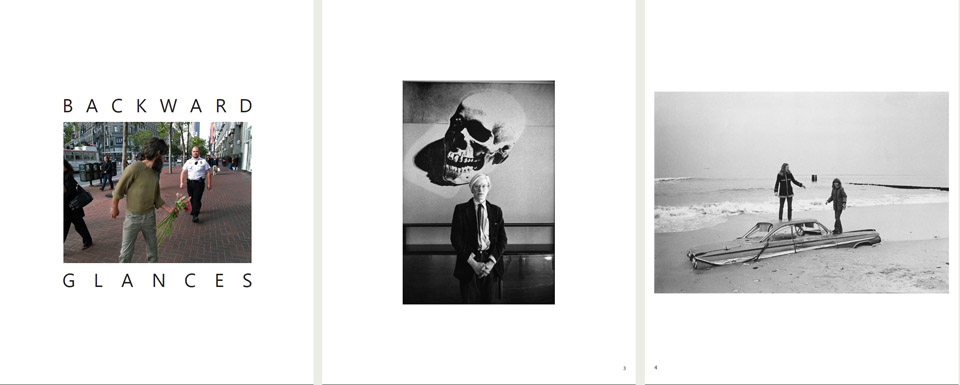
Other than this little book I’ve been putting together:

Interview with Dennis McGuire

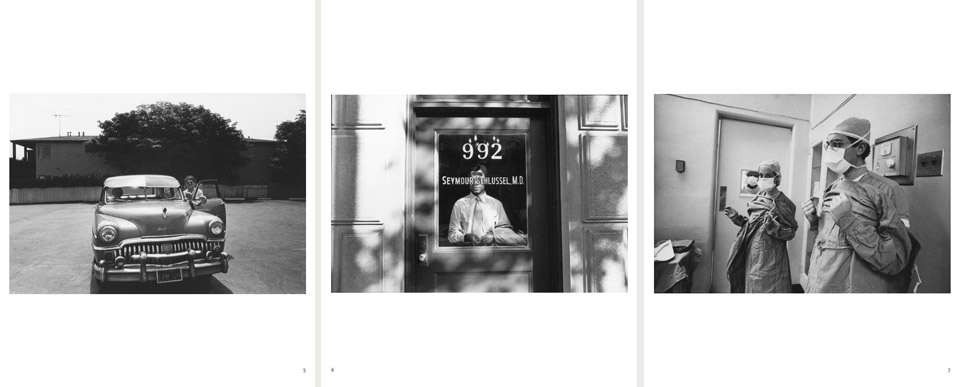
These Pictures have that temporal patina.
But I do hit the streets everyday.
I tend to photograph structures now, more than people.
And I photograph the same stuff over and again.

Interview with Dennis McGuire

What?

Roger Ebert once said, “Movies aren’t about their subjects; they’re about “how”
they’re about their subjects.”
I think the same holds true for photography. I try to make pictures that are about perception, as much as
they are about whatever I’m aiming the camera at.

Interview with Dennis McGuire

Why?

Sometimes there’s synergy.

Interview with Dennis McGuire

© Dennis McGuire

Interview with Carrie Boretz

Who? 

A mother first, always. But late in life. Or later than most. I feel gratitude I started my photographic career well before my daughters came along. Once that happened, I was either taking care of them, looking for them, or thinking about them. Work during those years would come with bursts of energy, eyes focused like an eagle.


What? 

The ordinary, mostly of unsuspecting people on the street who I see often out of the corner of my eye and I just STOP. For just that second it takes to absorb it. To shoot it, to feel it, to move on. If I get one good shot a day, which I try to, I feel amazing.

Where?

NYC, my home since the mid-70s. I shot on my street, around the corner, uptown, downtown, across the river. Across many oceans and continents too. But always on the streets.

When?

When NYC was raw and gritty and oh so real. People absorbed in one another and not their phones. 

Why? 

Because I can’t help myself. I see pictures all the time. To feel alive, engaged, connected. To feel.

© Carrie Boretz

Interview with Norbert Farkas

Who?
I live in Budapest, Hungary, I’m 34 years old. I’m studying photojournalism, and working as a sports photographer, including all type of dance and figure skating. In 2012-13 I lived in Spain, and during this period I realized I’m interested in street photography. Since then it’s played a really important role in my life. I’m a member of Hungary’s very first street photography collective, Budapestreet, which we founded in 2014.

Where? 
Everywhere. Mainly in Budapest, but for work I travel a lot. I like to explore new places. Sometimes I blend with tourist groups, unnoticed. I like to wait and look around in huge intersections. Sometimes I visit street festivals and fairs. In Hungary we have very strict regulations on photographing in public space, so we have to be more courageous.

When?
Always. When I’m out on the street, I’m looking for photographs all the time. I’m always alert. I can only relax when there is nothing going on around me.

What?
Hidden moments and details of ordinary life. I like humor and irony, mixing these two. I’m looking for solitude and the unexpected.

Why?
I like to see into the lives of others. Sometimes this is weird, I know. But seriously, without street photography I would feel empty and miserable. There are not so many things in my life which I have been doing for a long time, but I think street photography is gonna stay with me ’till the end of my life. Haha

Interview with Aleksandra Perovic Mihajlovic

Who?

I was born in 1983 in Belgrade, Serbia. Graduated from the School of Visual and Applied Arts. Worked for seven years at post-production studio as a designer. Quit my job and decided to focus on photography. Mother of two. Member of Belgrade Raw collective.

Interview with Aleksandra Perovic Mihajlovic

Where?

Although I usually take photos in the street, I prefer not to define myself as a street photographer. I’m attracted to crowded places where I can feel euphoria in the air, but at the same time keep a low-profile. Places where so many things are going on simultaneously, so you can pass unnoticed.

Interview with Aleksandra Perovic Mihajlovic

When?

When I have enough time to construct the frame and wait for someone to show up unexpectedly and make the composition complete. This happens spontaneously and fortuitously. It’s like a partly improvised mini-set, but that unforeseen part is extremely important, because it adds value to the photograph.

Interview with Aleksandra Perovic Mihajlovic

What?

I love to play with the objects I find within reach in short time. It adds the feeling of adventure to the whole process. The participants (subjects) are the people I meet on the street whom I approach directly. We work on the scene together, but our collaboration takes no longer than 3 minutes, after which we part. In this way, an ordinary passer-by gets a chance to be an accidental participant in the creative process. I bring discordant elements into certain relations and compose the shots based on them. In fact, I like to simulate situations that don’t commonly occur in reality.

Interview with Aleksandra Perovic Mihajlovic

Why?

If I’d give some thought to the matter why do I take pictures, I guess the answer would be: because I like the alternative ways of perceiving the everyday

Interview with Aleksandra Perovic Mihajlovic

© Aleksandra Perovic Mihajlovic

Interview with Steven Bollman

Who?

A person with many interests and a hungry curiosity. I’m very much a DIY guy. I’ve taken pictures since I was 12 years old and discovered early that it goes with virtually every other interest I may ever have.

Where?

Literally everywhere. My camera is always with me and ready to be used. I love being ignored.

When?

Literally anytime. Life is 24/7 and I hate hearing myself say, “I wish I had my camera.” I rarely say it.

What?

People first and foremost. The intangible moments. Drama in the mundane. The salt and sweat. The unpredictable.

Why?

I’m interested in the moments that you must be present for and awake to see. There are many of these moments that we miss when we blink. I believe in the value of life on life’s terms. Photography is a practice for me. It is a ritual. Open heart and open eyes.

© Steven Bollman

Interview with Sara Nicomedi

Who?

Since I was about three years old, I have imagined I would travel the world as a dancer. I attended the National Academy of Dance in Rome up until my late teens. Then I discovered that the Nofx inspired my dancing far more than Chopin’s compositions. I left the Academy to enroll in an artistic high school and immediately after graduating, I joined the Rome School of Photography. I worked as a waitress, teacher of decorating arts, and wedding photographer.

I moved to London in 2010. Here I discovered In-public and I started practicing street photography through Street Photography Now on Flickr. I’m still here but I’m but thinking to move soon. I think I’m done with the big city.

Where?

First I search for available energy which often lies in a smile exchange with someone passing by. It almost feels as if I want the “consent” to shoot. And just like after a gasoline fill up, once I have accumulated this energy I feel strong and free to go.

I follow the light, consider the architecture and backgrounds. I often prefer to avoid crowded places. Recently I hate being where a big mass of tourists are. I feel better when I’m surrounded by natural elements. Is it actually a sign that I’m getting old?

When?

When traveling to cities I don’t know, I might shoot for twelve hours a day without even realizing it. I never relax. When in London, I prefer to take advantage of the sunny days and light for shooting. When it gets rainy I stay at home to work on editing and everything else.

What?

It really depends on where I am and on the mood of the moment. Every place has its own strength and energy, and my shots are affected by it. Generally I prefer to frame a few strong subjects with a clean background. I like to include the context in which my subjects are. I like the photos to be cinematographic and poetic. I look for suspense. I prefer if there is some content to read on it.

Since I left my job to exclusively dedicate myself to photography, I have started a project I called “Extinction”. Through this project I want to create a scenario of what our society could be in the future. I do this by bringing together photos that I have taken throughout the years, fragments of our present, moments of daily life. Extinction is my vision of the future by looking at the present and the voice of my fears. Now when I’m outside shooting, this is what I’m looking to capture. It will be a very long term project, but I’m really into it and extremely excited I have found the right path for me to follow.

Why?

Without photography, I’d be a different person. Someone dancing to Chopin.

© Larry Franks

Interview with Avard Woolaver

Who?

When we look at the word “Who?” in connection with photography, obviously there are many ways to form a question. For instance, “Who are you, as a photographer?” Or, “Who do you take pictures of?” Considering various possible questions, though, an important one that struck me was, “Who sets the rules?”

When you’re taking photographs, you’re establishing the parameters and making the decisions. Some of these decisions are made in advance, while others are made in a split second as you take a photo. Black and white, or colour? Day or night? Best moment? Natural light? Balanced composition? Include this element or exclude it?
As with other art forms—painting, music, writing—the artist is in charge of all these factors. There are lots of ways making art mirrors our lives, and sometimes we’re just grinding it out. (Am I going to get up or stay in bed? Go to work or get fired?) Taking photographs reminds me how much control we do have in our lives. We choose what to focus on and what to ignore. We decide what’s important to us. We direct our attention to the subjects and the issues we care about, and we renew our commitment to those subjects, and we give them our love.

That’s what life is: an ongoing series of small choices about where we place our attention.

And, of course, the corollary is that there’s so much we have absolutely no control over. In so many photos, there’s an element of chance. Things happen in the frame that you don’t perceive as you take the picture. You may find out, later, elements or themes that are obvious only after the moment. Other people see things in your work that you miss.

Again, that’s what life is. We control what we can; we let the rest go. And we learn from both sides of it.

Interview with Avard Woolaver

Where?

Anywhere. One of my favourite Lee Friedlander quotes is this: “If I had a chance, I’d be out shooting all the time. You don’t have to go looking for pictures. The material is generous. You go out and the pictures are staring at you.” I take my camera pretty much everywhere—car to post office; into the convenience store; walking through my backyard to the garden. Being ready all the time helps me stay sharp.

At the same time, it does seem easier to get a good photo if there’s a lot of human activity in the scene. When there’s less happening, you need to be more mindful and more patient.

Interview with Avard Woolaver

When?

I think some aspects of my personality as a photographer were formed before I even had a camera or took a picture. I grew up on a farm with my parents and one sister, who’s a year older than I am.

I’m close to my sister and we have a great relationship, but it seems to me we didn’t play together that much when we were little. I grew up spending a lot of time entertaining myself, and I learned to enjoy and appreciate solitude from a young age. I played in the yard with my Tonka trucks; I watched animals and studied the landscape. Even though I wasn’t taking photos yet, I was developing some of the skills I would start to use much later for taking pictures.

Interview with Avard Woolaver

What?

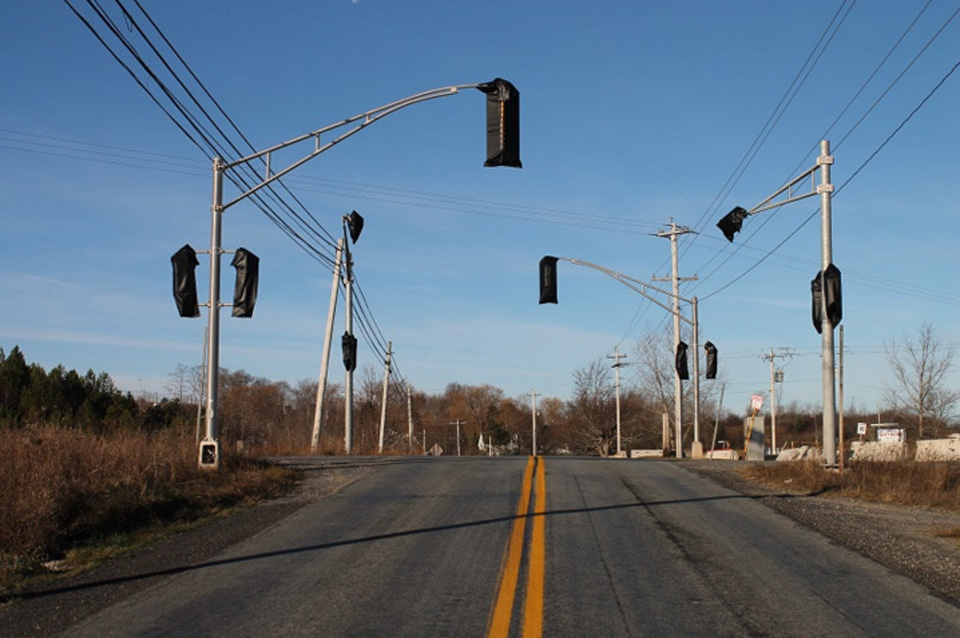
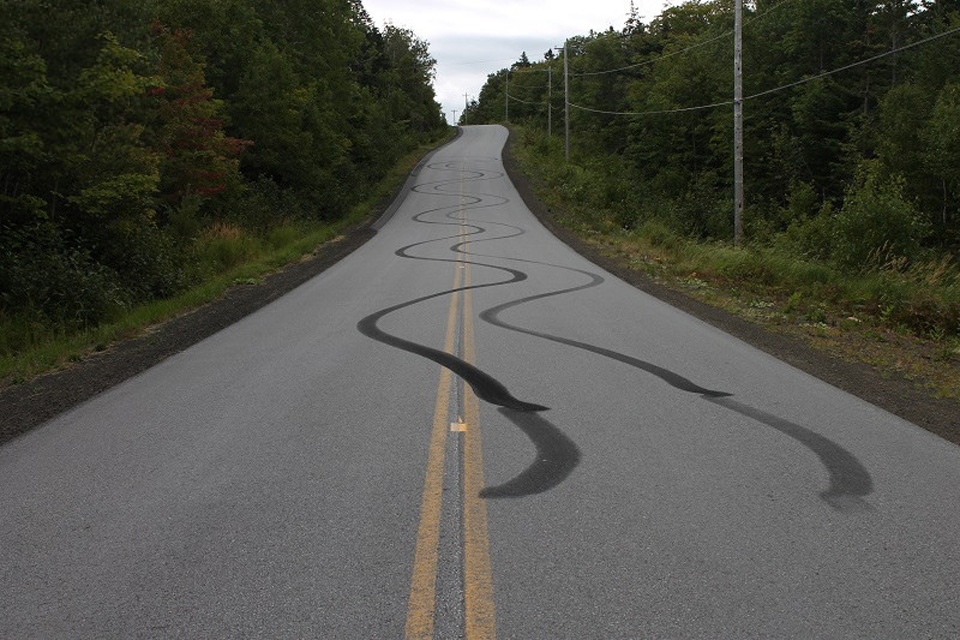
I look for whimsical scenes and elements of surrealism found in everyday life. I like to use juxtaposition and a certain degree of ambiguity. Photography keeps me in touch with the changing seasons and the passage of time. My images are intertwined with childhood memories and locations around Hants County, Nova Scotia.

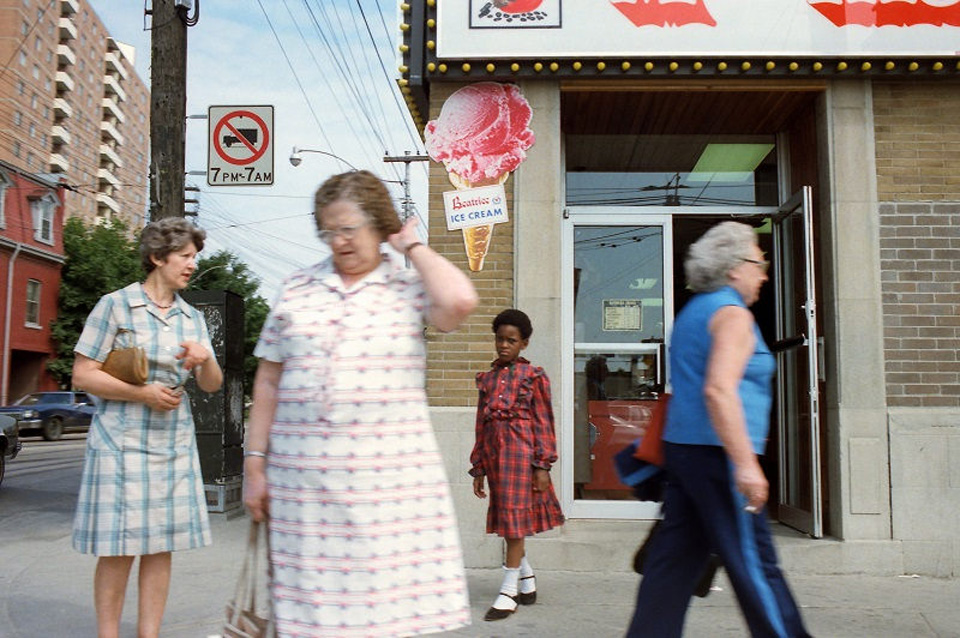
I have begun scanning an archive covering thirty years, which has led to two books: Toronto Flashback (1980-1986) and No Money Down – Toronto (1980-1986). These were self-published through Blurb and are available on Amazon. Work in progress includes the series, Scattershot: A Journey Through Time and Place (1976-present) and Wish You Were Here: Surrealism in Everyday Life, which are on my Facebook page, and Flickr.

Interview with Avard Woolaver

Why?

Photography is a unique medium: every photo is both the truth and a lie. Lots of photos relay compelling narratives that are in fact only being generated by the viewer from the experience of seeing random objects linked in a seemingly profound or significant way.


Interview with Avard Woolaver

© Avard Woolaver

Interview with Meryl Meisler

Who?

Hello there. I am Meryl Meisler, a 2nd generation American born 1951 in the South Bronx of NYC and raised in North Massapequa, Long Island (a suburb of The City). Passion for photography is part of my heritage. My father Jack Meisler (a printer by trade), his brother Al (a mechanic) and their father Murray (machinist) were avid photographers. My parents Jack and Sunny gave me my first camera “The Adventurer”, a 620 box camera, when I was 7. I still have that camera and it works.

5

What?

Inspired by Diane Arbus and Jacques-Henri Lartigue, l began photographing my, family, and friends while enrolled in a photography class taught by Cavalliere Ketchum at The University of Wisconsin, Madison. In 1975, I moved to New York City and studied with Lisette Model, continuing to photograph Long Island and NYC. After working as a freelance illustrator by day, I frequented and photographed the infamous New York Discos. As a 1978 CETA Artist grant recipient, I created a portfolio of photographs which exploring my Jewish identity for the American Jewish Congress. After CETA, I began a 31 year career as a NYC Public School Art Teacher.

4

When?

Upon retirement from my teaching career in 2010, I started releasing large bodies of previously unseen work. My monographs received international acclaim. A Tale of Two Cities: Disco Era Bushwick (Bizarre, 2014) juxtaposes my zenith of disco photos with images of the burned out yet beautiful neighborhood of Bushwick, Brooklyn in the 1980s. My second book Purgatory & Paradise SASSY ‘70s Suburbia & The City (Bizarre, 2015) contrasts intimate images of home life on Long Island alongside NYC street and night life. Now I am in the midst of working on the 3rd in a trilogy about the 1970s. It will be scintillating.

Bushwick, Brooklyn, NY 1984

Where?

I don’t usually go to photograph. I photograph where I am going. My work is represented by Steven Kasher Gallery, NYC. There are some terrific exhibits coming up that I am participating in.  The extended In-Public community is invited!

1

Why?

I have come to realize that for me, photography is memoir. There is a saying “seeing is believing”. Photography is an another expression of spirituality, living with purpose, questioning and seeking appreciative wonder.

6

© Meryl Meisler

Interview with Stella Johnson

Who?

I am a photographer and educator known for my passionate and honest documentary projects.

20615346_10213793435209124_1044820647_o

Where?

I starting photographing in Mexico for my personal projects and continued onto Cameroon and Nicaragua. My monograph, Al Sol: Photographs from Mexico, Cameroon, and Nicaragua, was published in 2008. After the publication of my book, I returned to my roots and have been photographing in Greece.

20590864_10213787231374032_962039589_o

When?

I have been photographing for over 40 years. About 15 years into my professional career and personal image making, I felt visually frustrated and took a class with Constantine Manos. He taught me how to make a strong image and has been my mentor and friend ever since.

20615240_10213793435889141_489128684_o

What?

I investigate culture, community, and family while developing lifelong relationships with the people I photograph. I received a Core Fulbright Scholar Grant to photograph in Mexico in 2003, and Fulbright Senior Specialist grants to teach in Mexico in 2006 and in Colombia in 2018.

03stella+johnson-nicaragua

Why?

I have always been interested in people and culture and how we live. I visited the Greek villages my grandparents grew up in without running water and electricity and this set me on a quest to see how people survive with so little, first in Mexico, then the Caribbean Coast of Nicaragua, on to Cameroon, West Africa and finally in Lesbos and Crete, Greece. Although I love making images, the photographs are incidental to the friendships I make.

20630015_10213793435009119_155274976_o

© Stella Johnson